


Extracorporeal Shockwave Therapy (ESWT)
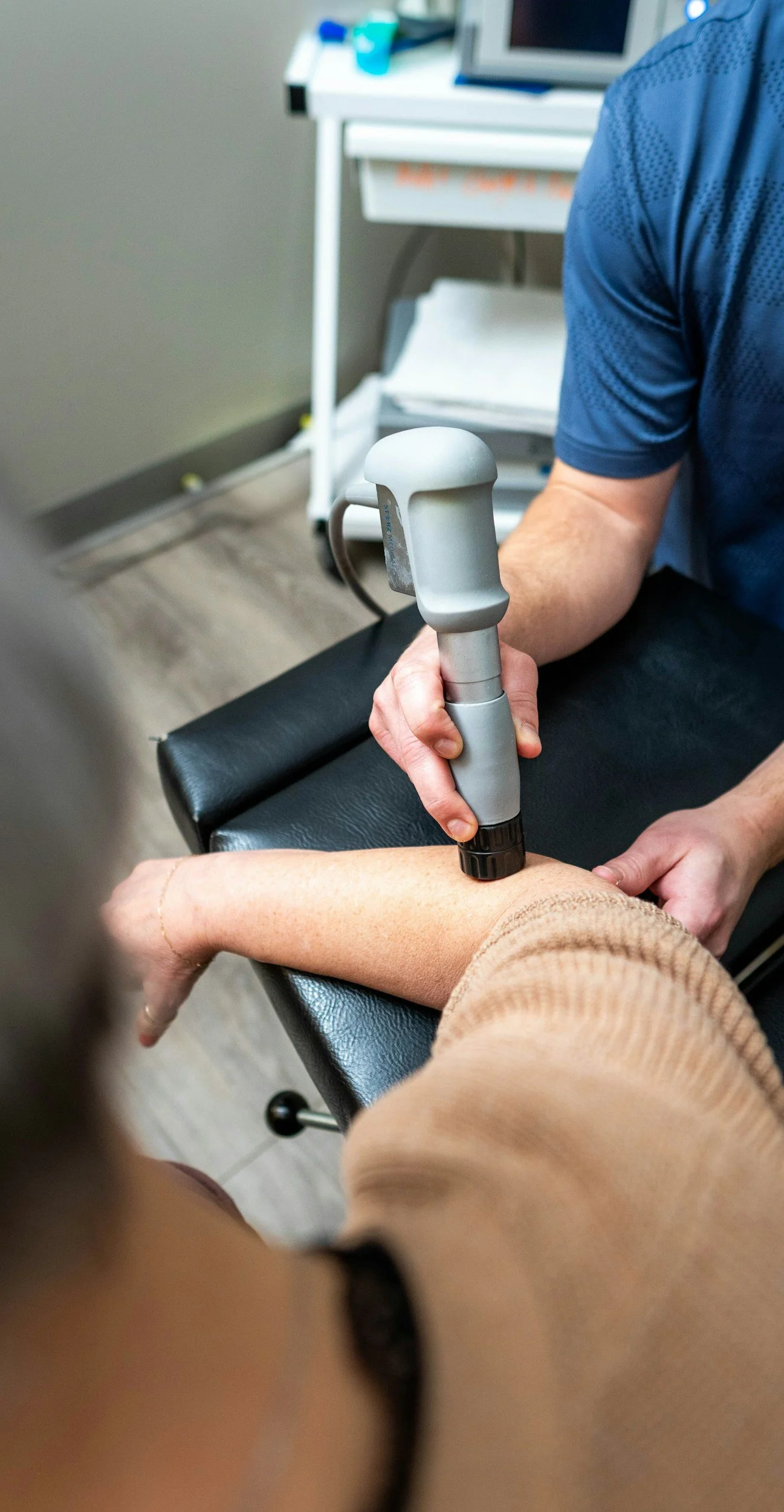
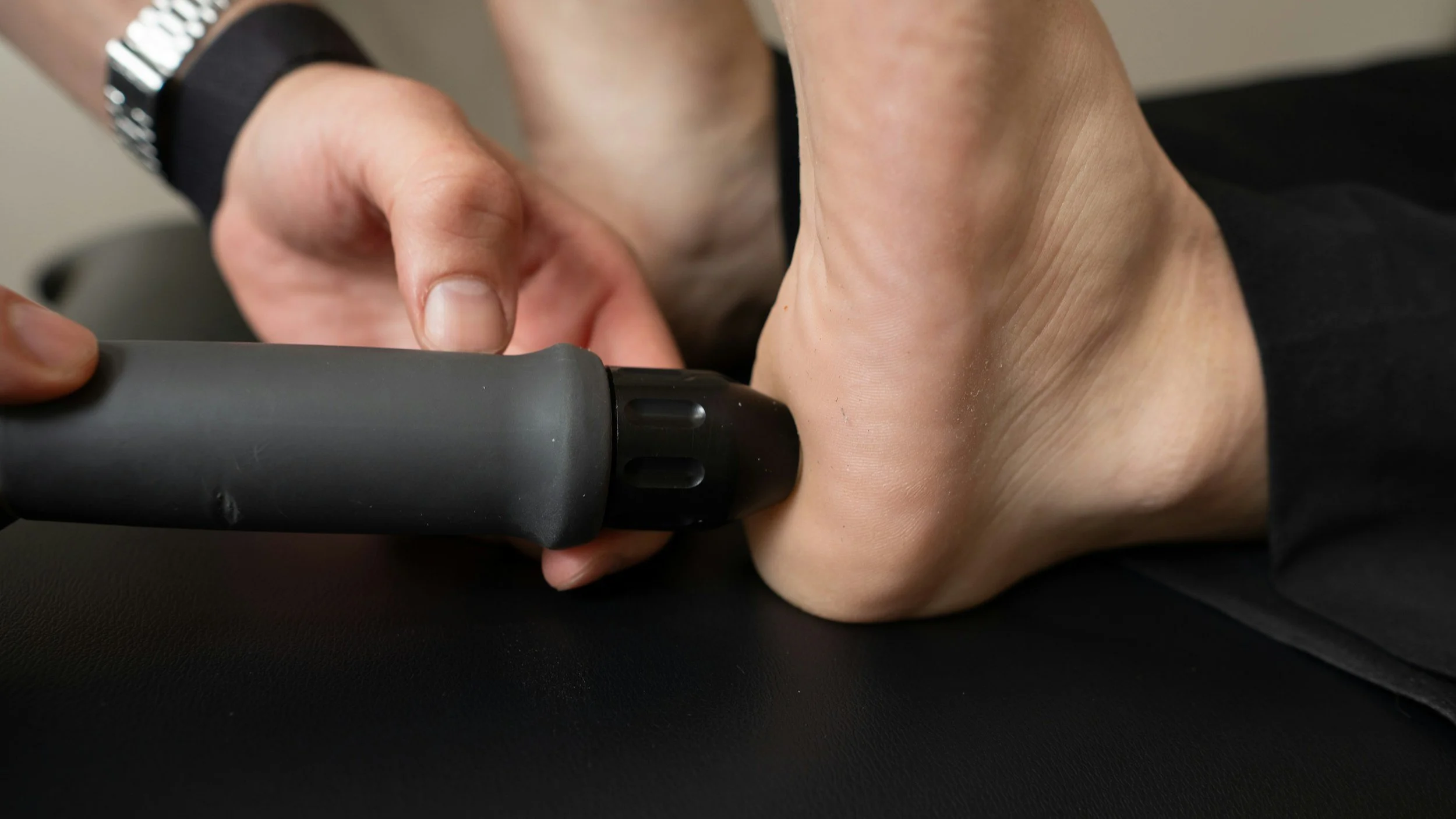
What can Shockwave Therapy be used for?
The most common indications for Shockwave Therapy include:
Plantar Fasciopathy (Heel Pain)
Achilles Tendinopathy
Patella Tendinopathy
Greater Trochanteric Pain Syndrome (Lateral Hip Pain)
Proximal Hamstring Tendinopathy
Tennis Elbow and Golfer’s Elbow
When is Shockwave Therapy used?
Shockwave Therapy may be offered to patients who have not responded well enough to initial physiotherapy treatment, including load management and strengthening, or rest. It is particularly useful in chronic conditions, that have lasted at least 8-12 weeks with no improvement. Shockwave Therapy should be used alongside a rehabilitation program, aiming to improve biomechanics, strengthen tissue and improve its tolerance to load. Shockwave therapy is a completely safe and effective treatment for damaged tendon tissues. The therapy is supported by the National Institute of Clinical Excellence (NICE) and is used within the NHS.
Initial Injury Consultation and Shockwave (45 mins), plus 2x subsequent Shockwave Sessions with Rehab/Treatment (30 mins each) - £195. All appointments are arranged 7-10 days apart for the optimal effectiveness.
£75 for single shockwave sessions.
Nice Guidelines advise 3-6 sessions of Shockwave to adequately stimulate this healing response.
If you have BUPA Health Insurance, they will often authorise coverage of Shockwave Therapy with us. Contact your insurer for details on how you can get an Authorisation Code to have Shockwave with MVMNT Physio & Health.
Contraindications to Shockwave Therapy
Please let your clinician know if any of the following apply to you:
You are pregnant
You have a cardiac pacemaker
You have had a corticosteroid injection within the last 3 months
You are currently having treatment for cancer
You have a blood clotting disorder
You are using blood thinning medication
What is Shockwave Therapy?
Shockwave therapy is a non-invasive treatment that uses high-energy acoustic waves to stimulate the body’s natural healing process. Shockwave therapy is particularly effective for tissues like tendons which don’t have as good of a blood supply, especially if they have been sore or injured for more than 8-12 weeks. There are multiple mechanisms of how the treatment affects painful tendons in the literature:
Stimulating blood flow: The high-energy acoustic waves delivered during RSWT can stimulate blood flow to the affected area. This increased blood flow can help to reduce inflammation and promote tissue regeneration.
Disrupting pain pathways: ESWT can help to disrupt pain pathways in the body by activating nerve fibres that inhibit pain signals. This can help to significantly reduce pain and improve function, especially in those with more chronic/longstanding issues.
Promoting tissue regeneration: RSWT can stimulate the production of growth factors and other substances that promote tissue regeneration. This can help to repair damaged tissues and accelerate the healing process.
Is Shockwave Therapy safe?
Shockwave is a very safe and well tolerated treatment. Patients may experience discomfort during treatment; however, we will adjust settings in order to make treatment comfortable and tolerable. Over time, pressures can be adjusted to gain maximum benefit.
Following treatment, patients may experience slightly more pain and redness in the area, but symptoms usually resolve within 24-48 hours.
How does Shockwave Therapy work?
During a shockwave therapy session, a device delivers acoustic waves to the affected area, which helps to increase blood flow, decrease inflammation, and stimulate the formation of new blood vessels. This process helps to promote healing and reduce pain. Sessions have to be evenly spaced and taken approximately 5-7 days apart.
Is Shockwave Therapy painful?
Shockwave therapy can cause some discomfort during the treatment, as the high-energy waves can feel intense. However, the discomfort is usually minimal and temporary. Many patients report feeling a tingling sensation or mild discomfort during the treatment.